Import or Make in India?
Landed Cost Calculator
Your China price is not your real price. Add customs duty, IGST, freight, port charges, interest on cash stuck at sea and rupee risk, and see what that appliance truly costs you in your Indian warehouse. Then see the price an Indian factory has to beat.
- Free
- 2026 duty and GST rates
- No sign-up
- Takes 30 seconds
Try it with your numbers
Calculate your own import
Three answers. No sign-up.
Your result updates instantly below
Freight, duty and all other costsImporting adds
+63%
on top of your China price, before you sell a single unit
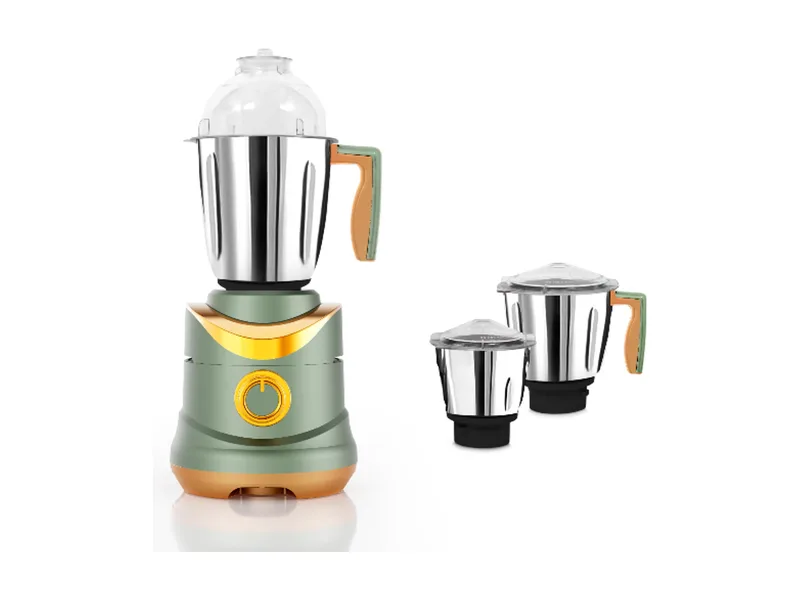
Mixer grinder · 2,000 units · US$16 FOB
Rough estimates only. See disclaimer.
The number an Indian factory has to beat
₹2,418/ unit
Any Indian factory quoting below ₹2,418 per unit (ex-factory, before GST) is cheaper than importing. On this order that's up to ₹19,11,944 going to duty, freight and charges instead of your margin.
Even with 25% imported parts, India-made comes to about ₹1,752, saving 29% ↓Full calculator: your import
Question 1
What do you import?
HS code 85094010 · example price shown, enter your supplier's quote
Question 2
What does your supplier quote per unit?
As quoted by your supplier
Question 3
How many units in one order?
Question 4
How does it ship?
Rough figure for this product. Use your packing list if you have it.
China to Nhava Sheva or Chennai
The rate your bank charges you to buy dollars and pay China. Check today's TT selling rate with your bank.
Question 5
If it were made in India, how much would still be imported?
Few products are 100% local on day one. Body, jars, cord, packaging and assembly can be made here; PCBs, some motors and batteries often still come from abroad.
Duties and other costs (edit if you know better)
Customs
Some sources show about 4% extra on certain items. Check your bill of entry or ICEGATE.
You get this back as GST credit, but your cash is locked until then
Notified by CBIC about twice a month. Duty is worked out on this rate, not your bank rate.
At the Indian end
Units you can't sell or easily fix, with no local service from the factory
Money and time
From advance payment to the goods selling
Component import and local cost settings
Parts usually pay less duty than the finished product. Plus SWS as above.
Parts are dense and often ship LCL or by air
How much more (or less, use minus) the Indian-made share costs than the same in China, including the Indian factory's margin
True landed cost per unit
₹2,467.97 excl. GST
- China price
- Sea freight and insurance
- Customs duty
- Clearing and transport
- Interest on locked cash
- Bank, damage, BIS
| China price (FOB) | US$16 × ₹94.5 bank rate | ₹1,512.00 |
| Sea freight | 2 × US$3,600 | ₹340.20 |
| Marine insurance | 1.125% of FOB | ₹17.01 |
| Basic customs duty | 20% at customs rate ₹94.5 | ₹373.84 |
| Social Welfare Surcharge | 10% of duty | ₹37.38 |
| Clearing, port and CFS | ₹35,000 / container | ₹35.00 |
| Port to warehouse | ₹25,000 / container | ₹25.00 |
| Bank remittance charges | 0.25% | ₹3.78 |
| Damage and defects | 1.5% | ₹35.16 |
| Interest on locked cash | 12% for 100 days | ₹88.59 |
| True landed cost per unit | ₹2,467.97 | |
| IGST paid at port, claimed back later | 18% | ₹410.48 |
| Whole order landed (2,000 units) | ₹49,35,944 |
Cash you send out first
₹53,89,389
Product, duty and IGST paid before you sell a unit
If the rupee falls 3%
+₹1,44,424
Extra cost on this order. The rupee touched a record low of about 97 in May 2026.
Containers
2
Containers well filled
Making it in India, realistically
India-made saves you
29%
₹716 per unit vs importing the finished product
On this order
₹14,32,913
kept in your business instead of going to duty, freight and charges
Room to spare: the Made-in-India share could cost up to 72% more than China and you would still match the import price. Every part you localise widens that gap.
Savings from making in India at every level of imported content. The dot is your setting.
How the India-made price is worked out
| Imported parts (China price) | 25% of ₹1,512 | ₹378.00 |
| Freight, duty and clearing on parts | 10% duty | ₹75.26 |
| Interest on parts cash | 75 days | ₹12.94 |
| Made in India share | 75% at China cost +10% | ₹1,247.40 |
| Estimated India-made price | ex-factory, before GST | ₹1,713.60 |
| Delivered to your warehouse | with freight and shorter cash cycle | ₹1,751.52 |

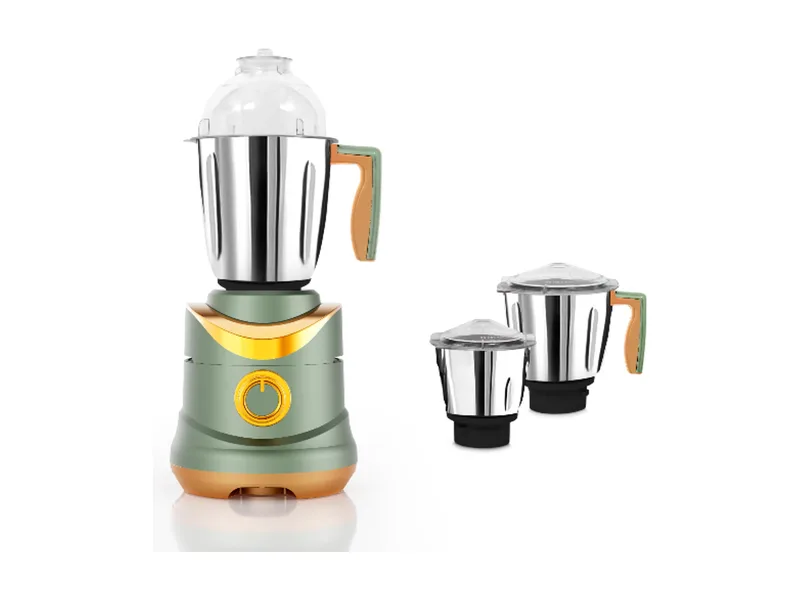
Topsail already makes mixer grinders
We can make it under your brand in our BIS-licensed factory in Silvassa. Send us this result and we'll tell you whether we can beat ₹2,418.
 On the Topsail siteMixer grindersSee the range
 Built and reviewed by Prakash Dadlani, Co-Founder of Topsail, a BIS-licensed manufacturer · Rates checked 16 November 2026
The short answer
Importing a small appliance from China typically adds 61% to 102% to the supplier's price by the time it reaches your warehouse in India. A mixer grinder quoted at US$16 (₹1,512) lands at about ₹2,468, so an Indian factory quoting below ₹2,418 ex-factory is cheaper than importing.
What is landed cost?
Landed cost is what one unit has cost you by the time it is in your warehouse in India, ready to sell. It is the supplier's price plus freight, insurance, customs duty, clearing and transport, bank charges, damaged units and the interest on cash locked up while the goods are made, shipped and sold.
The formula
Landed cost = FOB price + sea freight + insurance + customs duty + clearing and transport + bank charges + damage allowance + interest on locked cash
IGST is left out for a GST-registered importer, because it is claimed back as input credit. For a mixer grinder at US$16, the formula turns ₹1,512 into about ₹2,468 a unit, 63% more than the China price.
Landed cost of importing appliances from China, 2026
Six worked examples at the calculator's starting settings: an order of 2,000 units, sea freight of US$3,600 per 40ft container and US$1 = ₹94.5. The China prices are examples, not quotes.
| Product | HS code | China price (FOB) | Customs duty | Landed cost | Importing adds | Price to beat |
|---|---|---|---|---|---|---|
| Mixer grinder | 85094010 | US$16 (₹1,512) | 20% | ₹2,468 | +63% | ₹2,418 |
| Hand blender | 85094090 | US$6 (₹567) | 20% | ₹988 | +74% | ₹963 |
| Electric chopper | 85094090 | US$4.5 (₹425) | 20% | ₹803 | +89% | ₹781 |
| Table fan | 84145110 | US$7.5 (₹709) | 20% | ₹1,422 | +101% | ₹1,389 |
| Pedestal fan | 84145130 | US$11 (₹1,040) | 20% | ₹2,102 | +102% | ₹2,058 |
| Air fryer | 85166000 | US$17 (₹1,607) | 20% | ₹2,591 | +61% | ₹2,539 |
Landed cost is per unit and excludes IGST, which a GST-registered importer claims back. "Price to beat" is the ex-factory price, before GST, at which an Indian factory costs the same as importing.
Calculate yoursImport duty on small appliances from China, 2026
A finished small appliance pays 20% basic customs duty and a 10% Social Welfare Surcharge on that duty, 22% of the assessable value in all. IGST at 18% is then charged on the value plus duty, and a GST-registered importer claims it back.
| Product | HS code | Basic customs duty | Social Welfare Surcharge | Duty you bear | IGST (claimed back) | Paid at the port |
|---|---|---|---|---|---|---|
| Mixer grinder | 85094010 | 20% | 2% (10% of duty) | 22% | 22% | 44% |
| Hand blender | 85094090 | 20% | 2% (10% of duty) | 22% | 22% | 44% |
| Electric chopper | 85094090 | 20% | 2% (10% of duty) | 22% | 22% | 44% |
| Table fan | 84145110 | 20% | 2% (10% of duty) | 22% | 22% | 44% |
| Pedestal fan | 84145130 | 20% | 2% (10% of duty) | 22% | 22% | 44% |
| Air fryer | 85166000 | 20% | 2% (10% of duty) | 22% | 22% | 44% |
All figures are percentages of the assessable value (FOB price + freight + insurance, converted at the CBIC notified exchange rate). Rates as used in this calculator, checked 16 November 2026. Duty depends on the exact HS code: confirm yours with your customs broker.
Parts and raw materials are generally taxed lower than finished goods, which is why making in India can cost less. More on that in what PLI schemes and import duty changes mean for appliance brands.
Sources
How landed cost is calculated
- 1Convert what you payThe product price, sea freight and insurance are in dollars. They are converted at your bank's TT selling rate, because that is what you actually pay to remit.
- 2Work out the assessable valueCustoms converts the same value (FOB + freight + insurance) at the CBIC notified rate. Duty is charged on this figure, not on what your bank charged you.
- 3Add the dutiesBasic customs duty and AIDC are charged on the assessable value, and Social Welfare Surcharge on the duty. IGST is charged on the value plus all duties.
- 4Take IGST back outA GST-registered importer claims IGST back as input credit, so it is shown separately and not counted in the landed cost. It only counts in the interest on cash locked up.
- 5Add the Indian endClearing, port and CFS charges, transport to your warehouse, bank charges, an allowance for damaged units, and any BIS or testing cost for the order.
- 6Add the cost of timeInterest on the cash you sent out, for the days between your advance payment and the goods selling.
The "number to beat" is the ex-factory price (before GST) at which buying from an Indian factory costs you the same as importing, after allowing for domestic freight and the shorter cash cycle. Rates checked 16 November 2026. This is an estimate, not customs or tax advice. Confirm the exact HS code and duty for your product with your customs broker before you order.
Duty is only one of the checks at the port. Under the 2026 QCO your product may also need an ISI mark: check it with the ISI mark checker.
What a landed cost doesn't show
- BIS is now compulsoryUnder the 2026 QCO most household appliances need the ISI mark, and when importing, your Chinese factory must hold its own BIS licence. If it doesn't, your container can be held at port.
- Lead timeProduction, 2 to 3 weeks at sea and customs clearance mean 60 to 90 days from order to warehouse. An Indian factory can refill stock in weeks, so you hold less inventory.
- Minimum orderImporting pushes you to fill containers. Buying in India lets you order smaller batches, try new colours and models, and avoid dead stock.
- Service and sparesWhen something fails, an Indian factory is a phone call and a truck away, not a shipment and a language barrier.
Questions importers ask
In our example, a mixer grinder quoted at US$16 FOB (₹1,512) costs about ₹2,468 landed in India, which is 63% more than the China price. That is for an order of 2,000 units with 20% basic customs duty. The figure changes with your price, order size and freight, so enter your own numbers in the calculator.
Customs first works out the assessable value: the product price, freight and insurance, converted to rupees at the exchange rate notified by CBIC. Basic customs duty is charged on that value, Social Welfare Surcharge is charged on the duty, and IGST is charged on the value plus all duties. The calculator starts with 20% basic customs duty, 10% Social Welfare Surcharge and 18% IGST, and you can change each one. Confirm the HS code and duty for your product with your customs broker.
A mixer grinder (HS code 85094010) pays 20% basic customs duty plus a 10% Social Welfare Surcharge on that duty, which comes to 22% of the assessable value. IGST at 18% is then charged on the value plus duty. In all, about 44% of the assessable value is paid at the port, of which the IGST (22%) can be claimed back by a GST-registered importer. Rates as used in this calculator, checked 16 November 2026.
Not for a GST-registered importer. The IGST paid at the port is claimed back as input credit, so the calculator leaves it out of the landed cost. Your cash is locked until you claim it, though, so IGST is counted in the interest on locked cash and shown on its own line.
You pay your supplier and the shipping line at your bank's TT selling rate, so the product, freight and insurance are converted at that rate. Customs works out duty at a different rate, the one CBIC notifies about twice a month. The two are close but rarely the same.
It is the ex-factory price, before GST, at which buying from an Indian factory costs you the same as importing, after allowing for domestic freight and the shorter time your cash is locked up. In the mixer grinder example it is ₹2,418 per unit. Any Indian quote below that number is cheaper than importing.
It depends on how much of the product is still imported as parts and how the Indian-made share is priced. In the mixer grinder example, with 25% of the product's value still imported as parts and the Indian-made share costing 10% more than in China, the India-made unit comes to about ₹1,752 delivered, against ₹2,468 imported: a saving of about 29%. These are estimates, not a quotation.
Four that matter. Under the 2026 QCO most household appliances need the ISI mark, and the factory that makes them must hold its own BIS licence, or the container can be held at port. Importing takes 60 to 90 days from order to warehouse. It pushes you to fill containers, which ties up stock. And service and spares are harder from a factory abroad.
This calculator is built by a manufacturer, not a freight forwarder. Topsail makes appliances under its partners' brands in Silvassa and quotes against import prices every week. Last reviewed 16 November 2026.
Disclaimer. This calculator is provided by Topsail Appliances Pvt Ltd free of charge for general information and rough estimation only. All figures, including duty rates, exchange rates, freight, charges, savings and India-made cost estimates, are approximate, based on assumptions and publicly available information that may be incomplete, out of date or not applicable to your product, and may change at any time without notice. Results are not a quotation, offer or guarantee of price, and do not constitute legal, tax, customs, financial or professional advice. Actual costs depend on your exact product, HS classification, supplier, shipment and the rules in force on the date of import. Always confirm with your customs broker, tax adviser and suppliers before making any decision. Topsail Appliances Pvt Ltd, its directors, employees and partners accept no responsibility or liability of any kind for any loss, damage, cost or claim arising from the use of, or reliance on, this tool or its results. By using this tool you agree that you do so entirely at your own risk.